
കേരളത്തിന്റെ സവിശേഷമായ അതിർത്തി ക്ഷേത്രം
പശ്ചിമഘട്ടത്തിന്റെ ഉൾഭാഗത്ത്, കേരളവും തമിഴ്നാടും സംഗമിക്കുന്നിടത്ത്, അന്തർസംസ്ഥാന ചരിത്രവും അതുല്യമായ ഐതിഹ്യങ്ങളും നിറഞ്ഞ ഒരു പ്രാചീന ക്ഷേത്രമുണ്ട്. പരശുരാമ മഹർഷി സ്ഥാപിച്ചതായി വിശ്വസിക്കപ്പെടുന്ന അഞ്ച് ചരിത്രപ്രസിദ്ധമായ ശാസ്താ ക്ഷേത്രങ്ങളിൽ ഒന്നായാണ് ആര്യങ്കാവ് ശാസ്താ ക്ഷേത്രം പരക്കെ ആദരിക്കപ്പെടുന്നത്. ‘ആര്യങ്കാവ് അയ്യൻ’ എന്ന പേരിൽ പ്രശസ്തനായ ഇവിടുത്തെ പ്രതിഷ്ഠ ദക്ഷിണേന്ത്യയുടെ സാംസ്കാരിക ഭൂപത്രത്തിൽ സവിശേഷമായ സ്ഥാനം അലങ്കരിക്കുന്നു.
നൂറ്റാണ്ടുകളായി, ഈ ക്ഷേത്രം കാട്ടിൽ മറഞ്ഞുകിടന്ന ഒരു ചെറിയ സങ്കേതത്തിൽ നിന്ന് രണ്ട് സംസ്ഥാനങ്ങൾ തമ്മിലുള്ള സാംസ്കാരിക ഐക്യത്തിന്റെ ഊർജ്ജസ്വലമായ പ്രതീകമായി വളർന്നു.
ആര്യങ്കാവ് അയ്യന്റെ നഷ്ടപ്പെട്ട ചരിത്രവും പുനർകണ്ടെത്തലും
നാടൻ ഐതിഹ്യങ്ങൾ അനുസരിച്ച്, ആയിരക്കണക്കിന് വർഷങ്ങൾക്ക് മുമ്പ് പരശുരാമ മഹർഷിയാണ് മൂലവിഗ്രഹം പ്രതിഷ്ഠിച്ചത്. എന്നാൽ നൂറ്റാണ്ടുകൾ കഴിഞ്ഞപ്പോൾ കാട് കയറി ഈ പ്രദേശം നശിക്കുകയും, ക്ഷേത്രം നിബിഡമായ വനത്തിനുള്ളിൽ അപ്രത്യക്ഷമാവുകയും ചെയ്തു.
ചരിത്രപരമായി, പ്രാദേശിക ഗോത്രവിഭാഗമാണ് ഈ പുണ്യവിഗ്രഹം വീണ്ടും കണ്ടെത്തിയത്. വനത്തിന്റെ ഉൾഭാഗത്ത് വച്ച് അവർ ഭഗവാനെ ആരാധിക്കാൻ തുടങ്ങുകയും, ഭക്തിയുടെ പ്രതീകമായി കാട്ടുതേൻ വഴിപാടായി അർപ്പിക്കുകയും ചെയ്തു.
ഒരു വനക്ഷേത്രത്തിൽ നിന്ന് രാജകീയ രക്ഷാകർതൃത്വത്തിലേക്ക്
കേരളവും തമിഴ്നാടും തമ്മിലുള്ള വ്യാപാര പാതകൾ വികസിച്ചപ്പോൾ, സാധാരണ വ്യാപാരികൾ ഗോത്രവിഭാഗങ്ങളുടെ ഈ ആചാരങ്ങൾ ശ്രദ്ധിച്ചു. തുടർന്ന് അവർ മലനിരകളിൽ ദൈവീക വിഗ്രഹമുള്ള വിവരം അവിടുത്തെ പ്രാദേശിക രാജാവിനെ അറിയിച്ചു.
അതിന്റെ ആത്മീയ പ്രാധാന്യം മനസ്സിലാക്കിയ രാജാവ്, വനത്തിന്റെ ഒരു ഭാഗം വെട്ടിത്തെളിച്ച് അവിടെ ആദ്യത്തെ ഔദ്യോഗിക ക്ഷേത്ര നിർമ്മിതിക്ക് ഉടൻ തന്നെ നടപടികൾ സ്വീകരിച്ചു.
വൻ തീപിടുത്തവും അതുല്യമായ വാസ്തുവിദ്യയും
13-ാം നൂറ്റാണ്ടിന്റെ മധ്യത്തിൽ ക്ഷേത്രത്തിന് വൻ ദുരന്തം നേരിട്ടു. ഒരു വലിയ കാട്ടുതീയിൽ ക്ഷേത്രം പൂർണ്ണമായി കത്തിനശിച്ചു. കടുത്ത ചൂടുകാരണം പ്രധാന വിഗ്രഹം 108 കഷ്ണങ്ങളായി തകർന്നുപോയി. തീ അണച്ചതിനുശേഷം, ദുഃഖിതരായ നാട്ടുകാർ തകർന്ന ഓരോ കഷണവും അതീവ ശ്രദ്ധയോടെ ശേഖരിച്ചു.
തുടർന്ന്, ദൈവത്തിന്റെ ഹിതം അറിയുന്നതിനായി അധികാരികൾ ഒരു ദേവപ്രശ്നം നടത്തി. വിഗ്രഹത്തിന്റെ തകർന്ന കഷണങ്ങൾ ഒരു പെട്ടിയിൽ സുരക്ഷിതമായി സൂക്ഷിച്ച് ദിവസവും പൂജിക്കണമെന്ന സവിശേഷമായ ദൈവീക നിർദ്ദേശമാണ് ആചാരത്തിലൂടെ വെളിപ്പെട്ടത്. കൂടാതെ, ഉത്സവ എഴുന്നള്ളത്തുകൾക്കായി പുത്തൻ വിഗ്രഹം പ്രതിഷ്ഠിക്കാനും സമൂഹത്തിന് നിർദ്ദേശം ലഭിച്ചു.
ക്ഷേത്രം പുനർനിർമ്മിക്കാൻ വലിയ തോതിലുള്ള സാമ്പത്തിക സ്രോതസ്സുകൾ ആവശ്യമായിരുന്നു. ഇത് മനസ്സിലാക്കിയ തമിഴ്നാട്ടിലെ ചോകമ്പട്ടി ജന്മത് വൻ സാമ്പത്തിക സഹായവുമായി മുന്നോട്ടുവന്നു. ഈ അന്തർസംസ്ഥാന രക്ഷാകർതൃത്വം കാരണം, ഈ ക്ഷേത്രത്തിൽ പരമ്പരാഗത കേരള ശൈലിയുടെയും തമിഴ് വാസ്തുവിദ്യാ ശൈലിയുടെയും മനോഹരമായ ഒരു സമ്മിശ്രണം കാണാൻ സാധിക്കുന്നു.
ചരിത്രപരമായ കുറിപ്പ്: പഴയകാല പാരമ്പര്യങ്ങളുമായി പൊരുത്തപ്പെട്ട്, ഈ ക്ഷേത്രത്തിൽ 10 നும் 50 നும் ഇടയിൽ പ്രായമുള്ള സ്ത്രീകൾക്ക് പ്രവേശനം ഉണ്ടായിരുന്നില്ല.
പ്രതിഷ്ഠയുടെ സവിശേഷതയായ ഐക്കണോഗ്രഫി
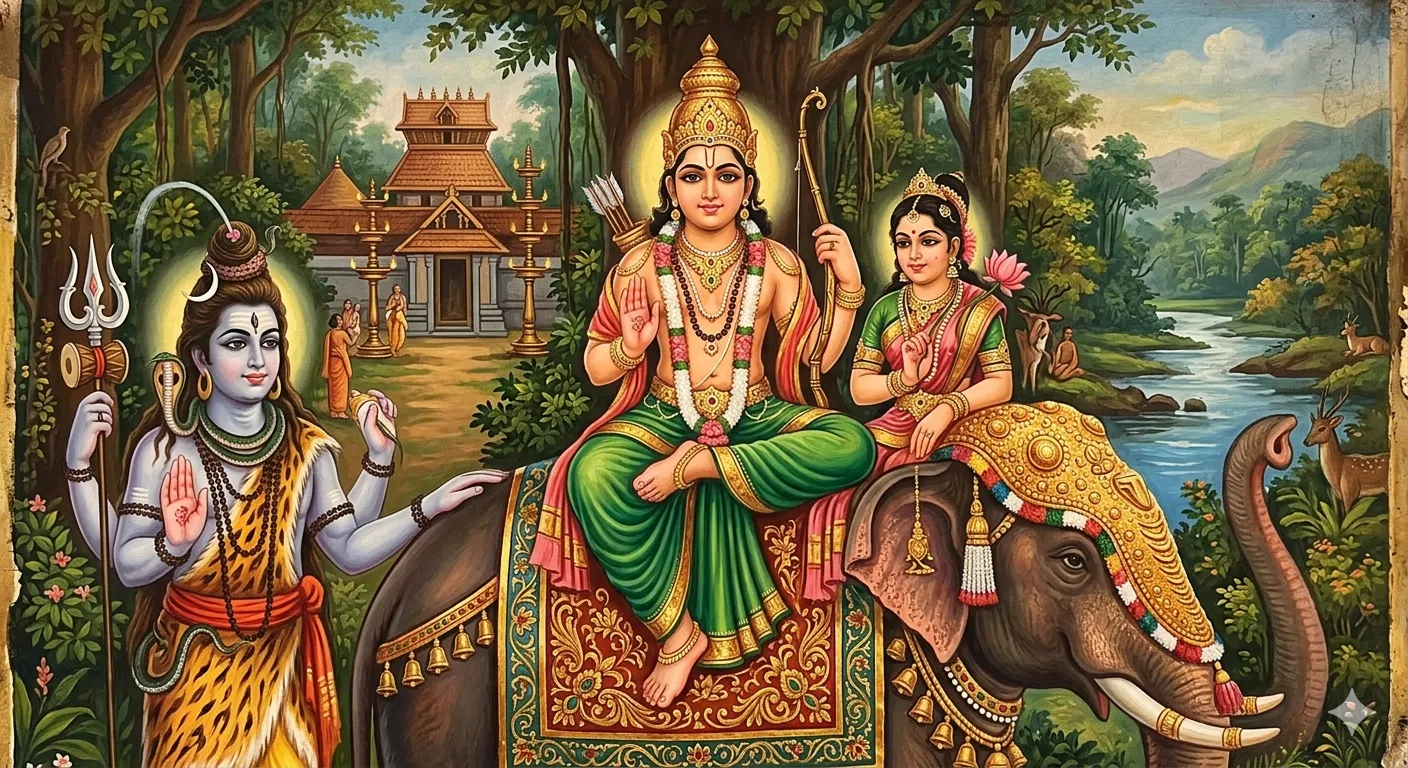
അച്ചൻകോവിൽ, കുളത്തൂപ്പുഴ, അല്ലെങ്കിൽ ശബരിമല എന്നിവിടങ്ങളിൽ കാണുന്ന ചിത്രങ്ങളിൽ നിന്നും തികച്ചും വ്യത്യസ്തമാണ് ആര്യങ്കാവിലെ വിഗ്രഹം. ഇവിടെ ശ്രീ അയ്യപ്പൻ ആനപ്പുറത്ത് ഗാംഭീര്യത്തോടെ ഇരിക്കുന്ന ഒരു ബാലന്റെ രൂപത്തിലാണ് പ്രത്യക്ഷപ്പെടുന്നത്.
ഇടതുകാൽ മടക്കി, വലതുകാൽ താഴേക്ക് തൂക്കിയിട്ടാണ് ഭഗവാൻ ഇരിക്കുന്നത്. അതുപോലെ, ശ്രീകോവിലിന്റെ ഇടതുവശത്തായി പുഷ്കലാ ദേവിയും, വലതുവശത്തായി ശിവഭഗവാനും നിലകൊള്ളുന്നു.
പുഷ്കലാ ദേവിയുടെ ഐതിഹ്യവും ദിവ്യവിവാഹവും
പുഷ്കലാ ദേവിയുടെ സാന്നിധ്യം ക്ഷേത്രത്തിന്റെ ഐതിഹ്യത്തിന് പ്രണയത്തിന്റെയും ഭക്തിയുടെയും മനോഹരമായ ഒരു ഭാവം നൽകുന്നു. നൂറ്റാണ്ടുകൾക്ക് മുമ്പ്, ഇന്നത്തെ ഗുജറാത്തിൽ നിന്നുള്ള ഒരു സൗരാഷ്ട്ര ബ്രാഹ്മണ കുടുംബം ബിസിനസ്സ് യാത്രയ്ക്കിടയിൽ ക്ഷേത്രത്തിന് സമീപം ക്യാമ്പ് ചെയ്തിരുന്നു. വ്യാപാര ആവശ്യങ്ങൾക്കായി വ്യാപാരിക്ക് കൂടുതൽ യാത്ര ചെയ്യേണ്ടി വന്നപ്പോൾ, അദ്ദേഹം തന്റെ ഇളയ മകളായ പുഷ്കോളയെ സുരക്ഷയ്ക്കായി ക്ഷേത്രത്തിൽ നിർത്തി.
തന്റെ താമസവേളയിൽ, പെൺകുട്ടി ഭഗവാനിൽ അഗാധമായ പ്രണയം തോന്നുകയും തീവ്രമായ ഭക്തിയിൽ മുഴുകുകയും ചെയ്തു. ഭഗവാനിൽ ലയിക്കുക എന്നതല്ലാതെ അവൾക്ക് മറ്റ് ആഗ്രഹങ്ങൾ ഒന്നുമുണ്ടായിരുന്നില്ല.
ഒടുവിൽ, മുഖ്യ പൂജാരിക്ക് ഒരു ദിവ്യ സ്വപ്നദർശനം ഉണ്ടായി. പുഷ്കല ദൈവത്തിൽ അലിഞ്ഞുചേർന്നിരിക്കുന്നുവെന്നും, അവളുടെ വിഗ്രഹം പ്രധാന പ്രതിഷ്ഠയ്ക്ക് തൊട്ടടുത്തായി അത്ഭുതകരമായി പ്രത്യക്ഷപ്പെട്ടിട്ടുണ്ടെന്നും ആ ദർശനം വെളിപ്പെടുത്തി.
തൃകല്യാണം: വാർഷിക ദിവ്യവിവാഹം
ഈ ദിവ്യസംഗമത്തിന്റെ സ്മരണയ്ക്കായി, മണ്ഡലപൂജാ ഉത്സവ വേളയിൽ എല്ലാ വർഷവും ക്ഷേത്രത്തിൽ തൃകല്യാണം (ദിവ്യവിവാഹം) ആഘോഷിക്കുന്നു. വധുവിന്റെ ബന്ധുക്കളായി മനോഹരമായി വസ്ത്രം ധരിച്ച്, സൗരാഷ്ട്ര കുടുംബത്തിലെ പിൻഗാമികൾ ഇന്നും വിവാഹത്തിൽ പങ്കെടുക്കാൻ ആര്യങ്കാവിൽ എത്തുന്നത് ശ്രദ്ധേയമാണ്.
Plaintext
[ സൗരാഷ്ട്ര കുടുംബം വധുവിന്റെ ബന്ധുക്കളായി എത്തുന്നു ]
│
▼
[ വരനെയും വധുവിനെയും പ്രതിനിധീകരിക്കുന്ന അലങ്കരിച്ച വിഗ്രഹങ്ങൾ ]
│
▼
[ വിവാഹ വ്രതങ്ങളുടെ ആചാരപരമായ കൈമാറ്റം ]
പുരാതന കാലത്ത്, വിവാഹം അടുത്ത വർഷത്തേക്ക് മാറ്റിവെക്കേണ്ടി വന്നാൽ വധുവിന്റെ കുടുംബം ഒരു ചെങ്കൊടി ഉയർത്തിക്കാട്ടുമായിരുന്നു. എന്നാൽ ഇന്ന്, ഈ മഹാസംഗമം കാണാൻ വർഷംതോറും എത്തുന്ന വലിയൊരു തീർത്ഥാടകജനക്കൂട്ടത്തെ ഉൾക്കൊള്ളുന്ന രീതിയിലേക്ക് ആചാരം മാറിയിരിക്കുന്നു.
വിശുദ്ധ ആചാരങ്ങളും വഴിപാടുകളും
കേരളത്തിലെ മറ്റ് ശാസ്താ ക്ഷേത്രങ്ങളിൽ നിന്ന് ഇതിനെ വേറിട്ടുനിർത്തുന്ന നിരവധി പ്രത്യേക ആചാരങ്ങൾ ഈ ക്ഷേത്രത്തിലുണ്ട്:
- തേനാഭിഷേകം: ഗോത്രകാല പാരമ്പര്യത്തിന്റെ ഓർമ്മപ്പെടുത്തലായി, പൂജാരിമാർ ഇന്നും ഭഗവാനിൽ തേൻ അഭിഷേകം നടത്തുന്ന ആചാരം തുടരുന്നു.
- ദിവസേനയുള്ള അഭിഷേകങ്ങൾ: ശ്രീകോവിലിൽ എല്ലാ ദിവസവും രാവിലെയും ഉച്ചയ്ക്കുമായി രണ്ട് പ്രധാന അഭിഷേക ചടങ്ങുകൾ നടക്കുന്നു.
- ആനയുടെ വിരോധാഭാസം: ഈ ക്ഷേത്രത്തിൽ ഭഗവാന്റെ വാഹനം ആനയാണെങ്കിലും, ഉത്സവ എഴുന്നള്ളത്തുകളിൽ യഥാർത്ഥ ആനകൾ പങ്കെടുക്കുന്നതിന് ക്ഷേത്രത്തിൽ കർശനമായ വിലക്കുണ്ട്.
നഷ്ടപ്പെട്ട രാജകീയ തുരങ്കത്തിന്റെ രഹസ്യം
ക്ഷേത്രത്തിലെ തിടപ്പള്ളിയെ (വിശുദ്ധ അടുക്കള) തെന്മലയ്ക്കടുത്തുള്ള ഒരു ചെറിയ വെള്ളച്ചാട്ടവുമായി ബന്ധിപ്പിച്ചിരുന്ന ഒരു രഹസ്യ തുരങ്കത്തെക്കുറിച്ച് നാടൻ ഐതിഹ്യങ്ങൾ പറയുന്നുണ്ട്.
ചരിത്രപരമായ ഐതിഹ്യപ്രകാരം, പ്രാദേശിക രാജാവ് തന്റെ കുളികഴിഞ്ഞയുടൻ ക്ഷേത്രത്തിലേക്ക് നേരിട്ട് പ്രവേശിക്കുന്നതിനാണ് ഈ ഭൂഗർഭ പാത നിർമ്മിച്ചത്. ഇന്ന് ഈ തുരങ്കം നിലവിലില്ല, അതിന്റെ കൃത്യമായ പാത പ്രാദേശിക ഐതിഹ്യങ്ങളിൽ മാത്രമായി അവശേഷിക്കുന്നു.
ഉപദേവതകൾ
ആര്യങ്കാവ് സന്ദർശിക്കുന്ന തീർത്ഥാടകർ സമുച്ചയത്തിനുള്ളിലെ മറ്റ് ചെറിയ പ്രതിഷ്ഠകളിലും പ്രാർത്ഥനകൾ അർപ്പിക്കുന്നു:
- ശ്രീ ഗണപതി
- നാഗദേവതകൾ (സർപ്പ ദൈവങ്ങൾ)
- കരുപ്പസ്വാമി
- കരുപ്പയമ്മ
- ഇന്ദിലയപ്പൻ
അനുഭവിക്കേണ്ട പ്രധാന ഉത്സവങ്ങൾ
നിങ്ങൾ ഈ അതിർത്തി അത്ഭുതം സന്ദർശിക്കാൻ പദ്ധതിയിടുകയാണെങ്കിൽ, ഈ രണ്ട് പ്രധാന വാർഷിക പരിപാടികൾക്ക് ചുറ്റുമുള്ള യാത്ര ഏറ്റവും മികച്ച സാംസ്കാരിക അനുഭവം നൽകും:
- മണ്ഡല പൂജ: ശീതകാലത്ത് അഗാധമായ ആത്മീയ ഭക്തിയോടെ ആഘോഷിക്കുന്നു.
- തൃകല്യാണം: അന്തർസംസ്ഥാന ദിവ്യവിവാഹ ആചാരത്തെ എടുത്തു കാണിക്കുന്ന വലിയ വാർഷിക ഉത്സവം.