
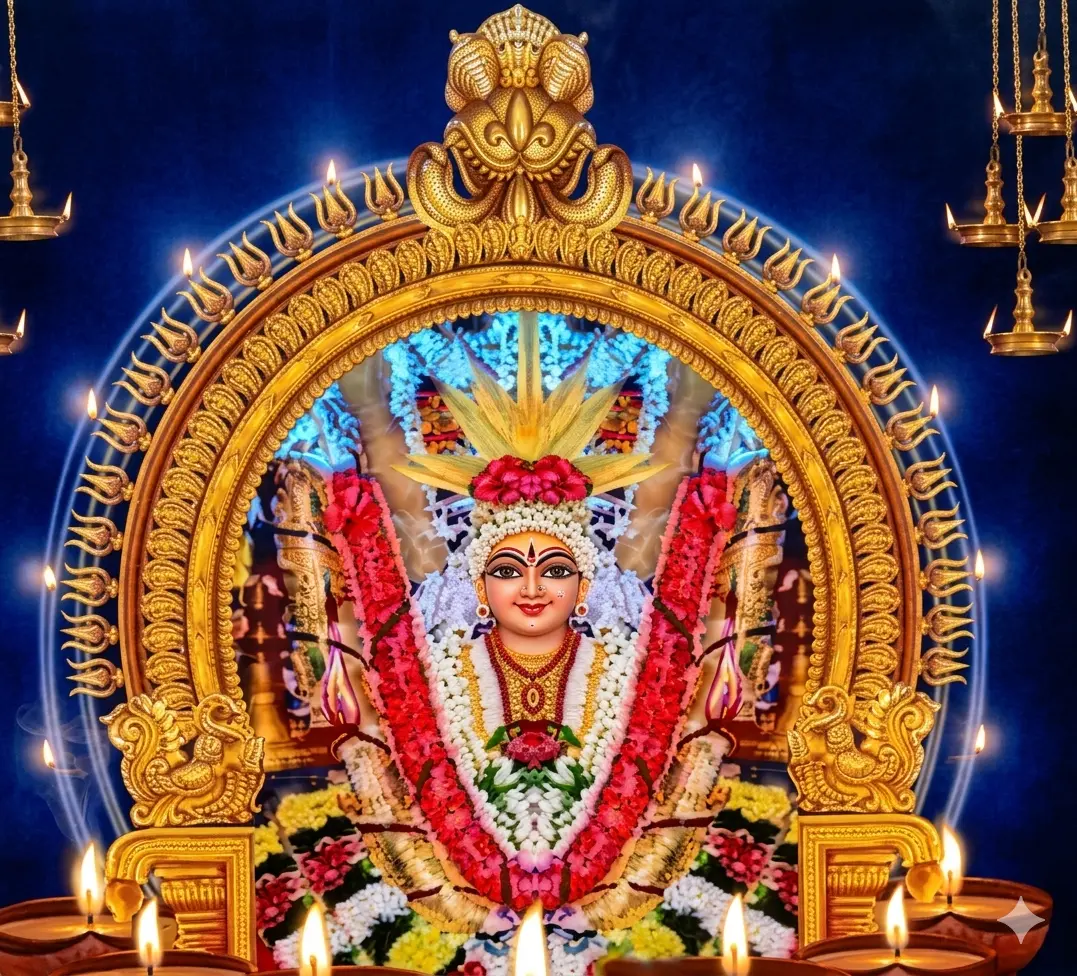
ചെറുയിൻകീഴ് ചരിത്രവും ഐതിഹ്യങ്ങളും ദിവ്യോത്സവങ്ങളും
തിരുവനന്തപുരം ജില്ലയിലെ ചിറയിൻകീഴിൽ സ്ഥിതി ചെയ്യുന്ന ശാർക്കര ദേവി ക്ഷേത്രം, തെക്കൻ കേരളത്തിലെ ഏറ്റവും കൂടുതൽ ആദരിക്കപ്പെടുന്നതുമായ ഭദ്രകാളി ക്ഷേത്രങ്ങളിൽ ഒന്നായി കണക്കാക്കപ്പെടുന്നു. ഗാംഭീര്യമുള്ളതും പുരാതനവുമായ ആൽമരങ്ങളാൽ ചുറ്റപ്പെട്ട ഈ പുണ്യശ്രേണി, കേരളത്തിൻ്റെ ആത്മീയ ചരിത്രത്തിൽ ഒരു സവിശേഷ സ്ഥാനം അലങ്കരിക്കുന്നു. ഇതിന്റെ കൃത്യമായ പഴക്കം കാലത്തിൻ്റെ മൂടുപടത്തിനുള്ളിലാണെങ്കിലും, തൃപ്പൂപ്പൂർ സ്വരൂപത്തിലെ രാജാവായ വീരരവിവർമ്മയുടെ കാലത്ത് 1599 എ.ഡി.-യിലാണ് ഔദ്യോഗിക നിർമ്മിതി ഉണ്ടായതെന്ന് തിരുവിതാംകൂർ കൊട്ടാരത്തിലെ ചരിത്ര രേഖകൾ വ്യക്തമാക്കുന്നു.
എന്നിരുന്നാലും, പരമ്പരാഗത ആചാരപരമായ അനുഷ്ഠാന കലയായ ‘കളിയൂട്ട്’ ആരംഭിച്ചതോടുകൂടി 1748 എ.ഡി.-യിൽ ഈ ക്ഷേത്രത്തിന് വലിയ സാംസ്കാരികവും മതപരവുമായ പ്രാധാന്യം കൈവന്നു. ഈ വഴിതിരിവ് ക്ഷേത്രത്തെ ഈ പ്രദേശത്തെ ഭക്തിയുടെ ഒരു പ്രധാന കേന്ദ്രമാക്കി മാറ്റി.
ശർക്കരക്കുടത്തിന്റെ ദിവ്യ ഐതിഹ്യം
നാടൻ ഐതിഹ്യങ്ങൾ അനുസരിച്ച്, ഇന്ന ക്ഷേത്രം നിൽക്കുന്ന പ്രദേശം ഒരിക്കൽ ജനവാസമില്ലാത്ത, ഒറ്റപ്പെട്ട ഒരു കാടായിരുന്നു. മധ്യകേരളത്തിൽ നിന്നുള്ള വ്യാപാരികൾ വ്യാപാരത്തിനായി തിരുവനന്തപുരത്തേക്ക് യാത്ര ചെയ്യാൻ ഈ വഴിയാണ് ഉപയോഗിച്ചിരുന്നത്. അവരുടെ ബുദ്ധിമുട്ടുകൾ മനസ്സിലാക്കിയ ഭരണാധികാരിയായ രാജാവ്, ഈ ക്ഷീണിതരായ യാത്രക്കാർക്കായി ഒരു ഊട്ടുപുര (ചത്രം) നിർമ്മിച്ചു.
ചരിത്രപ്രസിദ്ധമായ ഒരു സന്ധ്യയിൽ, ശർക്കര പാവ് നിറച്ച വലിയ മൺകലങ്ങളുമായി ഒരു സംഘം വ്യാപാരികൾ ഈ ഊട്ടുപുരയിൽ അഭയം തേടി. ശർക്കര നിറച്ച വലിയ മൺകലങ്ങൾ അവർ നിലത്തു വെച്ച് പെട്ടെന്ന് ഉറങ്ങിപ്പോയി. അടുത്ത ദിവസം രാവിലെ യാത്ര തുടരാൻ ഒരുങ്ങവെ, എത്ര ശക്തി പ്രയോഗിച്ചിട്ടും ഒരു പ്രത്യേക കുടം മാത്രം നിലത്തുനിന്ന് ഇളക്കാൻ കഴിയില്ലെന്ന് കണ്ട് അവർ അത്ഭുതപ്പെട്ടു.
ഈ ഞെട്ടിക്കുന്ന വാർത്ത അടുത്തുള്ള ഗ്രാമങ്ങളിൽ അതിവേഗം പടരുകയും കാഴ്ചക്കാരുടെ വലിയൊരു ജനക്കൂട്ടത്തെ ആകർഷിക്കുകയും ചെയ്തു. ഈ അത്ഭുതകരമായ സംഭവത്തെക്കുറിച്ച് അറിഞ്ഞ ആദരണീയനായ വില്വമംഗലം സ്വാമിയാർ ആ സ്ഥലത്തേക്ക് തിടുക്കത്തിൽ എത്തി. തന്റെ ദിവ്യദൃഷ്ടിയിലൂടെ, ആ കുടത്തിനുള്ളിൽ ഭദ്രകാളിയുടെ പ്രകാശപൂരിതമായ സാന്നിധ്യം അദ്ദേഹം തിരിച്ചറിഞ്ഞു. കൃത്യം ആ സ്ഥലത്ത് ദേവിക്കായി ഒരു ക്ഷേത്രം നിർമ്മിക്കാൻ അദ്ദേഹം ഉടൻ തന്നെ നാട്ടുകാരോട് നിർദ്ദേശിച്ചു.
പ്രദേശത്തിന് ‘ശർക്കര’ എന്ന പേര് ലഭിച്ചതെങ്ങനെ?
സ്വാമിയാർ കുടം എടുക്കാൻ ശ്രമിച്ചപ്പോൾ അത് പൊട്ടിപ്പോവുകയും, അതിലെ ശർക്കര പാകം ഒന്നിച്ച് ഒരു പ്രത്യേക പരാബോള രൂപത്തിൽ ഉറഞ്ഞുപോവുകയും ചെയ്തു. ഈ അത്ഭുതകരമായ ‘ശർക്കരയിൽ’ നിന്നാണ് მთელი പ്രദേശത്തിന് ആ പേര് ലഭിച്ചത്. യഥാർത്ഥ പ്രതിഷ്ഠ ശർക്കര കൊണ്ടു നിർമ്മിച്ചതായതുകൊണ്ട്, നിത്യപൂജകൾക്കായി അതിനു മുന്നിൽ ഒരടിയിലേറെ വലിപ്പമുള്ള ഒരു തിരുവായാടി (വൽക്കണ്ണാടി ബിംബം) സ്ഥാപിച്ചു.
മാർത്താണ്ഡവർമ്മ മഹാരാജാവും കളിയൂട്ടിന്റെ ഉത്ഭവവും
ആധുനിക തിരുവിതാംകൂറിന്റെ ശില്പിയായ അനിഴം തിരുനാൾ മാർത്താണ്ഡവർമ്മയെ പരാമർശിക്കാതെ സർക്കാറ ദേവി ക്ഷേത്രത്തിന്റെ വലിയ ചരിത്രം പൂർണ്ണമാകില്ല. 1748-ൽ, കഴിഞ്ഞകാലങ്ങളിൽ പലതവണ പരാജയങ്ങൾ നേരിട്ടതിനുശേഷം, തന്റെ കടുത്ത ശത്രുക്കളോട് നിർണ്ണായക പോരാട്ടം നടത്താൻ രാജാവ് കായംകുളത്തേക്ക് നീങ്ങുകയായിരുന്നു. ദൈവീക ഇടപെടൽ തേടി, താൻ വിജയിച്ചുവന്നാൽ വടക്കൻ കേരളത്തിന്റെ പരമ്പരാഗത ആചാരകലയായ ‘കളിയൂട്ട്’ ക്ഷേത്രത്തിൽ വഴിപാടായി അവതരിപ്പിക്കുമെന്ന് മാർത്താണ്ഡവർമ്മ മഹാരാജാവ് സർക്കാറ ദേവിയുടെ മുന്നിൽ ദൃഢപ്രതിജ്ഞ ചെയ്തു.
മാർത്താണ്ഡവർമ്മ ഒരു ചരിത്രവിജയം നേടി. തൻ്റെ വാക്കിന് വിലനൽകി അദ്ദേഹം 10 ദിവസം നീണ്ടുനിൽക്കുന്ന വലിയൊരു കളിയൂട്ട് ഉത്സവം സ്ഥാപനവൽക്കരിച്ചു. ഇത് ഭദ്രകാളിയുടെ ജനനം, സംഘർഷം, രാക്ഷസനായ ദാരികനുമേലുള്ള അന്തിമ വിജയം എന്നിവ മനോഹരമായി നാടകീയമായി അവതരിപ്പിക്കുന്നു.
മഹത്തായ കാഴ്ച: മുടിയുഴിച്ചിലും നിലനിൽപ്പോരും
കളിയൂട്ട് ഉത്സവത്തിന്റെ അവസാന ദിവസങ്ങൾ മനംമയക്കുന്ന ദൃശ്യവിരുന്നാണ് നൽകുന്നത്. എട്ടാം ദിവസം, രാജാവ് വടക്കൻ കേരളത്തിൽ നിന്ന് കൊണ്ടുവന്ന ഐതിഹാസികമായ പൊന്നാര കുടുംബത്തിൽ നിന്നു തെരഞ്ഞെടുക്കപ്പെട്ട അംഗം ദേവിയുടെ ഭാവം ഉൾക്കൊള്ളുന്നു. ഏകദേശം 50 കിലോഗ്രാം ഭാരമുള്ള പവിത്രമായ തലപ്പാവണിഞ്ഞ്, ‘മുടിയുഴിച്ചിൽ’ ചടങ്ങിനിടയിൽ ആ നടൻ ദിവ്യമായ ഒരു പരാശക്തിയിൽ പ്രവേശിക്കുകയും, ഭക്തരെ അനുഗ്രഹിക്കാനും തിന്മയായ ദാരികനെ കണ്ടെത്താനും ഗ്രാമങ്ങളിൽ സഞ്ചരിക്കുകയും ചെയ്യുന്നു.
9, 10 തീയതികളിൽ പ്രശസ്തമായ ‘നിലത്തിൽ പോര്’ നടക്കുന്നു. താളവും നാടകീയതയും നിറഞ്ഞ ഈ അവതരണം ദാരികന്റെ വധത്തോടെ അവസാനിക്കുന്നു, ഇത് തിന്മയ്ക്കെതിരെയുള്ള നന്മയുടെ നിത്യമായ വിജയത്തെ പ്രതീകപ്പെടുത്തുന്നു. ശക്തമായ ചെണ്ടമേളവും ആയിരക്കണക്കിന് ഭക്തരും ഈ ചടങ്ങിന്റെ പ്രത്യേകതയാണ്.
ഗരുഡൻ തൂക്കത്തിന്റെ അത്ഭുതകരമായ അനുഷ്ഠാനം
പത്താം ദിവസത്തെ വലിയ സമാപനമാണ് ‘ഗരുഡൻ തൂക്കം’ (കഴുകൻ തൂക്കം). കഠിനമായ ഈ അനുഷ്ഠാനത്തിൽ, ഭക്തർ ഗരുഡ വേഷം ധരിച്ച് ആചാരപരമായ നൃത്തം ചെയ്യുന്നു. തുടർന്ന്, അവരുടെ പുറംതൊലിയിൽ മൂർച്ചയേറിയ ഇരുമ്പ് കൊളുത്തുകൾ കുത്തിയിറക്കുകയും, പറക്കുന്ന കഴുകനെ അനുകരിച്ചുകൊണ്ട് വലിയൊരു മരക്കൂട്ടത്തിൽ നിന്ന് അവരെ തൂക്കിലേറ്റുകയും ചെയ്യുന്നു. കഠിനമായ വ്രതാനുഷ്ഠാനങ്ങൾക്കും ഏഴു ദിവസം ക്ഷേത്രത്തിൽ ഭജനം ഇരുന്നതിനും ശേഷം എല്ലാ വർഷവും ഏകദേശം 200-ഓളം ഭക്തർ ഈ കഠിനമായ വഴിപാട് നടത്തുന്നു.
ഉപദേവതകളും പ്രധാന ഉത്സവങ്ങളും
പ്രധാന പ്രതിഷ്ഠയായ ഭദ്രകാളിയെ കൂടാതെ, വലിയ ആത്മീയ പ്രാധാന്യമുള്ള നിരവധി ഉപദേവതകളും ഈ ക്ഷേത്രത്തിലുണ്ട്. ഭക്തർ പ്രാർത്ഥനകൾ അർപ്പിക്കുന്നത്:
- ഗണപതി
- വീരഭദ്രൻ
- നാഗങ്ങൾ (നാഗരാജാവും നാഗയക്ഷിയും)
- യക്ഷിയമ്മ
- പ്രധാന വാർഷിക ഉത്സവങ്ങൾ 10 ദിവസം നീണ്ടുനിൽക്കുന്ന മീനത്തിലെ ഉത്സവവും പ്രശസ്തമായ കുഭ ഭരണിയും പൊങ്കാലയുമാണ്.
എടുത്തുപറയേണ്ട മറ്റൊരു കാര്യമെന്തെന്നാൽ, ചിറയിൻകീഴ് സ്വദേശിയായ പ്രശസ്ത മലയാള ചലച്ചിത്രനടൻ പ്രേം നസീർ, തന്റെ അഗാധമായ ഭക്തിയുടെ പ്രതീകമായി ഈ ക്ഷേത്രത്തിന് ഒരു ഗജവീരനെ (ആനയെ) നടക്കിരുത്തിയിരുന്നു.